For this sauna installation & cost guide, the useful answer is practical: what makes the setup safe, comfortable, easy to maintain, and worth using when the novelty wears off.
My neighbor Dave spent last October hauling a cedar barrel sauna kit off a flatbed trailer, into his backyard, and onto a gravel pad he’d compacted himself over a weekend. The kit cost him $3,200. By the time he’d hired an electrician to trench a 240V line 45 feet from his panel, poured a proper base after the gravel settled unevenly, and replaced the cheap felt-gasket door that came with the unit, he was north of $6,400. He doesn’t regret any of it. He uses the thing almost every night. But he’ll tell anyone who asks: “The sticker price was about half the real number.”
That gap between catalog price and installed cost is the single most important thing to understand about a home sauna project. Most builds land between $2,490 and $16,980 for the unit itself, but the pad, the electrical run, permitting, and small extras can add 40% to 70% on top. Here’s how the numbers actually shake out.
The Line Items Nobody Budgets For
The sauna unit gets all the attention. Fair enough. But three other line items deserve equal billing on your spreadsheet.
The pad. A barrel sauna on flat ground can sit on a 4-inch compacted gravel pad with a drainage layer, and that’s a legitimate weekend project. A cabin sauna in a cold or wet climate belongs on a 4-inch reinforced concrete slab, which runs roughly $4 to $7 per square foot installed. Budget $400 to $900 for gravel, $1,200 to $2,400 for concrete. Skipping this step (or doing it poorly) means fixing a cracked, settled foundation with a 600-pound structure sitting on top of it. That’s a headache you don’t want.
The electrical run. A traditional sauna heater pulls 4.5 to 9 kW on a dedicated 240V circuit at 30 to 50 amps. If your panel has capacity and the run is short, you might get away with $400 to $800. If the panel is crowded and the electrician has to trench across 50 feet of yard, you’re looking at $1,200 to $1,800. This is not optional DIY. A licensed electrician should run the circuit, pull the permit, and tie into your main panel. Cutting corners on high-amperage wiring is how house fires start.
Permits. Many counties exempt detached structures under 200 square feet from a building permit. The electrical permit for a 240V circuit is almost always required regardless. Call your local building department before you order anything.
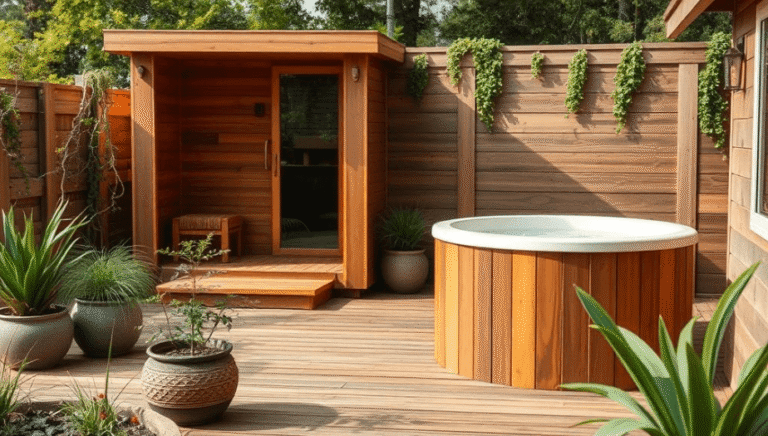
So when you see a $2,490 entry barrel kit advertised online, the honest all-in number for a typical suburban install is closer to $3,800 to $5,500. A mid-tier cabin with a quality heater ($6,000 to $10,000 for the unit) lands at $8,500 to $14,000 installed. And the panoramic glass-front or premium thermo-aspen builds ($12,000 to $16,980) can push past $18,000 with site work.
Reading a Spec Sheet Without Getting Tripped Up
Spec sheets are where sauna shopping goes sideways for most people. Here’s the short list that actually matters.
Heater sizing. Match the heater to the cabin volume. Undersized heaters run constantly and die early. Oversized heaters cycle too hard and waste energy. Read the manufacturer’s published sizing chart. Don’t trust a forum post from 2019.
Wood species and joinery. Pre-cut tongue-and-groove cladding in cedar, hemlock, thermo-aspen, or redwood is the standard for a reason. Cheap units skip the tongue-and-groove and use butt joints with felt strips. Those builds leak heat from day one and look tired within two seasons. The difference in material cost between a decent kit and a bargain kit is maybe $400 to $800. Over a 15-year lifespan, that’s the cheapest insurance you’ll buy.
Door hardware. This sounds trivial. It isn’t. A sauna door gets opened and closed in extreme temperature swings thousands of times. Cheap hinges and latches corrode or loosen fast. Look for stainless steel hardware and a tempered glass window if the door has one.
If you’re shopping cold plunges instead (or in addition), the equivalent checklist is chiller HP, filtration micron rating, ozone/UV sanitation, and tub material. A 1/3 HP chiller holds 50°F in a small insulated tub in a temperate climate. It will struggle badly in a hot garage in August. A purpose-built insulated tub with a 1 HP chiller holds 39°F to 45°F all day. A stock-tank conversion with bagged ice costs $400 to $900 but requires you to become the chiller, which gets old by week three.
The Health Case (What the Research Actually Shows)
The most frequently cited sauna study is the Laukkanen 2015 cohort published in JAMA Internal Medicine. Researchers followed 2,315 middle-aged Finnish men for 20 years and found a dose-response relationship between sauna frequency and reduced cardiovascular mortality. Men who used a sauna 4 to 7 times per week saw roughly half the cardiovascular mortality of those using it once a week.
A 2018 BMC Medicine follow-up from the same group reported lower dementia incidence at the highest sauna frequencies. The proposed mechanism involves heat acclimation, improved endothelial function, and a heart-rate response that mimics moderate-intensity exercise. Think of it as a cardiovascular workout where you’re sitting still, which is an imperfect analogy but a useful one.
For a home user, 20-minute sessions at 170°F to 195°F, two to four times per week, is a reasonable starting point. Hydrate before and after. Step out if you feel lightheaded. The research is encouraging for healthy adults, but the Laukkanen cohort was specifically middle-aged Finnish men with decades of sauna familiarity. Extrapolating that to every population takes some humility.
Anyone with a cardiac history, uncontrolled blood pressure, or who is pregnant should talk to a physician before starting.
Outdoor vs. Indoor vs. Infrared (The Honest Comparison)
An outdoor barrel sauna heats in 25 to 35 minutes and lives on a small pad in your backyard. An indoor cabin heats faster but eats living space and requires venting to the outside or a properly sized exhaust fan. An infrared cabin runs at lower temperatures (120°F to 150°F), plugs into a standard 120V outlet, and avoids the 240V electrical conversation entirely, but it produces a different physiological response than a traditional Finnish sauna. Lower air temperature, direct radiant heat on the skin. Some people prefer it. Some people find it underwhelming compared to the real thing.
Cold plunges split similarly. A purpose-built insulated tub with a chiller ($4,500 to $7,500 residential, $9,000 to $14,000 commercial-grade stainless) is a set-and-forget appliance. A chest-freezer conversion is cheap but lacks filtration and sits in a mechanical gray area that most manufacturers would void a warranty over.
My honest take: the right answer is almost never the cheapest option or the most expensive one. It’s the build that matches your climate, your yard, your electrical situation, and (this is the part people skip) the routine you’ll actually maintain. A $12,000 panoramic sauna that gets used twice a month is a worse investment than a $3,500 barrel kit someone fires up four nights a week.
Where to Dig Deeper on Models and Pricing
Once you’ve got a handle on the basics, the next step is comparing actual model lineups and price tiers side by side. For a longer reference covering sizing, wood options, heater wattage, and install considerations in plain language, see this sauna installation & cost guide. It’s the kind of page worth bookmarking before you start pulling the trigger on a build.
When to Call a Pro (Three Non-Negotiable Moments)
Electrical, always. Any time a 240V circuit is involved. That covers most traditional sauna heaters and commercial-grade cold-plunge chillers. No exceptions.
Pad work in tricky conditions. Freeze-thaw climates, soft soil, sloped yards. A pad that settles after the unit is on it costs multiples of what it would have cost to do right the first time.
Medical clearance. If you have an arrhythmia, uncontrolled hypertension, a recent cardiac event, Raynaud’s phenomenon, are pregnant, or manage a chronic condition, a 10-minute conversation with your doctor is the right first step. Heat and cold therapies carry real cardiovascular load. The Finnish cohort data is population-level; your cardiologist knows your specific situation.
FAQs
Can I run a sauna year-round in cold climates?
Yes, with caveats. Outdoor saunas are designed for cold weather and actually perform well in winter (the temperature contrast is part of the appeal). Budget extra pre-heat time. Cold plunges with insulated tubs and integrated chillers handle below-freezing ambient temps if the chiller’s operating range supports it. Check the spec sheet for low-temperature performance limits.
What is the lifespan of a quality sauna?
A well-built cedar or thermo-aspen sauna lasts 15 to 25 years with light annual maintenance. Heaters typically get replaced once during that span. Stainless-steel cold-plunge tubs last 15 to 20 years; chillers are usually rebuilt or replaced every 6 to 10 years.
Do I need a permit for a sauna?
Some municipalities exempt detached structures under 200 square feet from a building permit. The electrical permit for a 240V circuit is almost always required. Call your local building department before ordering.
How quickly does a sauna heat up?
A 6 kW barrel sauna reaches 170°F in 25 to 35 minutes. A 7.5 kW cabin sauna hits the same temperature in 30 to 45 minutes. A cold-plunge chiller pulls a freshly filled tub from tap temperature to 45°F in 3 to 8 hours depending on chiller size and starting temp.
How long should a typical sauna session last?
Most adults land between 12 and 20 minutes at 170°F to 195°F for sauna, and 2 to 5 minutes at 40°F to 55°F for a cold plunge. Build up gradually if you’re new to either practice.
Is a sauna HSA or FSA eligible?
Rarely. A residential sauna is generally not HSA or FSA eligible unless a clinician issues a Letter of Medical Necessity for a documented condition. Eligibility is patient-specific. Talk to your tax advisor before assuming a purchase will qualify.
Does a sauna add to home resale value?
Appraisers don’t add dollar-for-dollar return on a sauna installation. That said, a well-built outdoor wellness setup is increasingly treated as a selling feature, particularly in Northeast and Pacific Northwest markets where buyers expect it.
Disclaimer. This article is general consumer information, not medical advice. Heat and cold therapies carry real cardiovascular load. Anyone with arrhythmias, uncontrolled hypertension, Raynaud’s phenomenon, recent cardiac events, or who is pregnant should consult a physician before starting any new sauna or cold-plunge routine.
Any 240V electrical work should be completed by a licensed electrician under the appropriate local permit.
HSA and FSA reimbursement on wellness equipment is patient-specific and depends on a Letter of Medical Necessity from a clinician. Talk to your tax advisor before assuming a purchase qualifies.