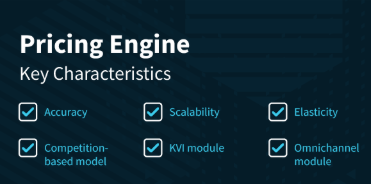
Retail pricing has evolved from a periodic operational task into a real-time strategic capability. In competitive markets where customer expectations change quickly and competitor prices shift frequently, retailers need technology that can adapt just as fast. A modern dynamic pricing engine helps businesses respond to these changes intelligently while protecting margins and maintaining competitiveness across channels.
However, not all pricing solutions deliver the same value. Choosing the right platform requires understanding the features that support scalable, data-driven pricing decisions. Retailers evaluating pricing technology should focus on capabilities that enable automation, insight generation, and strategic flexibility rather than simple rule-based adjustments.
Here are the most important features to look for in a dynamic pricing engine.
Real-Time Data Processing Capabilities
One of the defining strengths of a modern dynamic pricing engine is its ability to process real-time data from multiple sources. Pricing decisions today depend on factors such as competitor activity, demand signals, stock availability, seasonality, and customer behavior.
Instead of relying on outdated historical pricing models, real-time processing allows retailers to respond immediately to market changes. For example, if competitor pricing shifts during a promotional campaign, the pricing engine can recommend adjustments that maintain competitiveness without unnecessarily reducing margins.
Retailers operating across multiple channels especially benefit from this capability because pricing consistency must be maintained across stores, websites, and marketplaces simultaneously.
Competitor Price Monitoring Integration
Competitor pricing is one of the most important inputs in dynamic pricing strategy. A strong dynamic pricing engine should integrate competitor monitoring directly into its decision-making workflow.
Rather than simply tracking competitor prices separately, advanced platforms combine competitor data with internal performance metrics to recommend optimal pricing responses. This prevents retailers from reacting blindly to competitor discounts while still maintaining market alignment.
Integration with a pricing intelligence platform strengthens this capability even further by enabling automated competitor tracking across large product catalogs and multiple channels.
Demand Elasticity Analysis
Understanding how customers respond to price changes is critical for improving profitability. Demand elasticity analysis helps retailers identify which products are highly price-sensitive and which can sustain premium positioning.
A powerful dynamic pricing engine uses elasticity insights to determine where price increases are possible without affecting conversion rates and where adjustments are required to maintain competitiveness. This helps retailers avoid excessive discounting and ensures pricing decisions support long-term revenue growth rather than short-term sales spikes.
Over time, elasticity modeling becomes even more accurate as the platform continues to learn from customer behavior patterns.
Omnichannel Pricing Alignment
Customers expect consistent pricing experiences regardless of where they shop. Whether they browse online, compare marketplace listings, or visit physical stores, price transparency plays a major role in purchase decisions.
A modern dynamic pricing engine supports centralized pricing governance while still allowing flexibility across regions, channels, and customer segments. Retailers can define strategic pricing rules that ensure consistency while adapting to local competitive conditions.
This capability helps reduce pricing conflicts between channels and strengthens customer trust in brand positioning.
Scenario Simulation and Forecasting Tools
Before implementing pricing changes at scale, retailers need confidence that adjustments will deliver positive outcomes. Scenario simulation tools allow pricing teams to test different strategies before applying them across product catalogs.
For example, retailers can evaluate how a price increase may affect demand, how a promotion might impact margins, or how competitor campaigns could influence category performance. These forecasting capabilities reduce risk and help teams make more informed decisions.
Simulation features also allow organizations to move from reactive pricing adjustments toward proactive pricing strategy planning.
Automation at Scale
Retailers often manage thousands or even millions of SKUs across multiple sales channels. Manual pricing decisions at this scale are not practical.
Automation is therefore a core feature of any effective dynamic pricing engine. Pricing rules can be configured based on business objectives such as margin protection, market competitiveness, or inventory clearance. Once configured, the platform continuously evaluates pricing conditions and recommends updates automatically.
Automation not only improves operational efficiency but also ensures pricing teams can focus on strategic initiatives rather than repetitive manual tasks.
Integration with Existing Retail Systems
Pricing decisions do not happen in isolation. They depend on data from ERP platforms, inventory systems, POS environments, and eCommerce platforms.
A strong dynamic pricing engine integrates seamlessly with existing technology infrastructure so that pricing decisions reflect real operational conditions. For example, inventory availability should influence pricing strategies differently for overstocked products compared to fast-selling items.
Integration also ensures pricing updates can be implemented quickly across all customer touchpoints without delays or inconsistencies.
Promotion Optimization Support
Promotions remain one of the most powerful tools for driving retail performance, but poorly designed campaigns can quickly reduce profitability. A dynamic pricing engine should support promotion planning by analyzing competitor campaigns, historical performance, and demand signals.
This allows retailers to design targeted promotions that increase conversions without relying on blanket discounting strategies. Promotion optimization capabilities help balance revenue growth with margin protection, especially during peak trading periods.
When combined with a pricing intelligence platform, promotion planning becomes even more effective because retailers gain access to broader market insights that inform campaign timing and positioning.
Actionable Insights Through Analytics Dashboards
Data visibility is essential for effective pricing strategy. Retailers need clear insights into how pricing decisions affect revenue performance, customer behavior, and competitive positioning.
Advanced analytics dashboards within a dynamic pricing engine provide transparency into pricing outcomes across categories, channels, and time periods. These insights help teams refine pricing strategies continuously rather than relying on static assumptions.
Access to performance analytics also improves collaboration between merchandising, marketing, and pricing teams by aligning decision-making around shared metrics.
Supporting Long-Term Pricing Strategy Transformation
Choosing the right dynamic pricing engine is not just about implementing automation. It is about building a pricing capability that supports long-term competitiveness in fast-changing retail environments.
By combining real-time data processing, elasticity modeling, competitor intelligence, automation, and analytics dashboards, a modern pricing intelligence platform enables retailers to move beyond reactive pricing decisions toward proactive optimization strategies. Organizations that invest in these capabilities are better positioned to protect margins, improve customer experience, and maintain pricing agility across increasingly complex omnichannel retail environments.