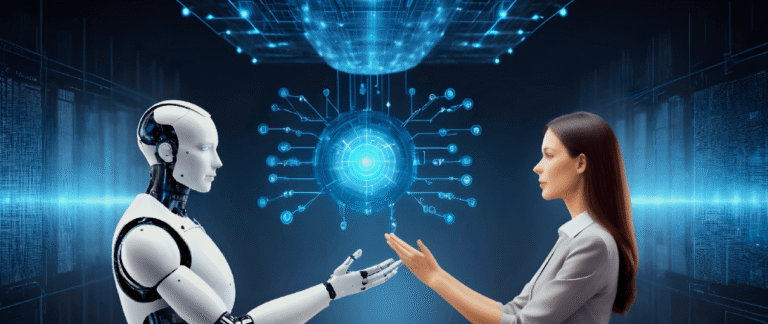
AI is reshaping the landscape of human-machine collaboration. By automating routine tasks, it frees employees to concentrate on higher-level thinking and creativity. This shift not only enhances productivity but also promotes a culture of innovation. As organizations adapt to these changes, they may find themselves exploring new possibilities. The implications of this partnership extend beyond efficiency, raising questions about the future of work and the evolving role of human creativity in a technology-driven world.
Enhancing Productivity Through Automation
Automation is revolutionizing the way businesses operate, significantly enhancing productivity across various sectors.
Task automation streamlines repetitive activities, allowing employees to focus on creative and strategic tasks. This shift not only fosters innovation but also empowers individuals to take ownership of their work.
Furthermore, workflow optimization ensures that processes are efficient, reducing time wastage and enhancing overall organizational effectiveness, ultimately promoting a culture of freedom and autonomy.
See also: How AI Is Helping to Solve Complex Environmental Problems
Facilitating Data-Driven Decision Making
As organizations embrace innovative automation technologies, the ability to harness vast amounts of data becomes increasingly vital for informed decision-making.
Through predictive analytics, businesses can uncover patterns and trends, enabling them to anticipate future outcomes.
Furthermore, real-time insights empower teams to respond swiftly to changing conditions, fostering a culture of agility and strategic foresight that enhances overall organizational effectiveness.
Fostering Innovation and Creativity
While many organizations focus on efficiency and productivity, the true potential of AI lies in its ability to foster innovation and creativity.
By facilitating creative partnerships between humans and machines, AI enables the exploration of unconventional ideas and the development of innovative solutions.
This collaboration not only enhances problem-solving capabilities but also inspires individuals to transcend traditional boundaries, ultimately driving progress and freedom in various fields.
Conclusion
In the evolving landscape of work, AI acts as a lighthouse, guiding human creativity through the fog of repetitive tasks and data overload. By enhancing productivity, facilitating data-driven decisions, and fostering innovation, this collaboration not only empowers employees but also cultivates a culture of continuous improvement. As organizations harness the synergy between human intuition and machine efficiency, they position themselves to navigate the complexities of the future with agility and confidence, illuminating new pathways to success.