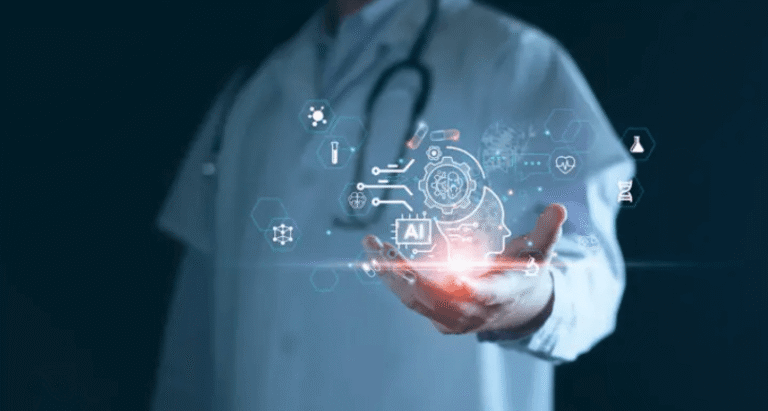
AI is increasingly becoming a cornerstone in healthcare and medical research. Its capabilities enhance diagnostics, enabling earlier disease detection through advanced data analysis. Predictive analytics further refine treatment plans, personalizing patient care and improving outcomes. Additionally, AI technologies streamline operational processes, fostering better communication within healthcare systems. As these developments unfold, the implications for patient empowerment and systemic transformation warrant closer examination. What lies ahead in this intersection of technology and medicine?
Advancements in Diagnostics and Early Detection
Advancements in diagnostics and early detection have revolutionized the healthcare landscape, significantly improving patient outcomes.
Machine learning algorithms enable rapid analysis of vast datasets, facilitating biomarker discovery for various diseases.
This innovation allows for earlier identification of conditions, empowering patients with knowledge and choices regarding their health.
Such developments reflect a transformative shift, promoting autonomy and enabling proactive healthcare management.
See also: How AI Is Making Healthcare More Personalized
Enhancing Treatment Plans Through Predictive Analytics
Predictive analytics is reshaping treatment plans in healthcare by leveraging data-driven insights to tailor therapies to individual patient needs.
Through predictive modeling, healthcare professionals can identify optimal interventions, enhancing outcomes in personalized medicine.
This approach allows for more accurate forecasting of treatment responses, empowering patients and practitioners alike to make informed decisions that prioritize well-being and autonomy in the face of complex health challenges.
Streamlining Healthcare Operations With AI Technologies
The integration of AI technologies in healthcare is proving transformative, particularly in streamlining operations across various facets of the industry.
Automated scheduling systems enhance efficiency, reducing wait times and optimizing resource allocation.
Additionally, AI-driven patient management solutions enable personalized care, fostering improved communication between patients and providers.
This shift empowers healthcare professionals to focus more on patient outcomes, ultimately enhancing overall service delivery.
Conclusion
In a world where AI is hailed as the panacea for all healthcare woes, one might wonder if the next step is to replace doctors with chatbots entirely. After all, why rely on human intuition when algorithms can crunch numbers faster than a caffeinated intern? As AI transforms diagnostics and treatment, perhaps the real patients to watch will be the ones still waiting for a human touch in a system increasingly run by machines—an irony not lost in the age of innovation.