Modern businesses operate in conditions of constant change. Market demand shifts quickly. Customer behavior evolves daily. Competitive dynamics adjust in real time. In this environment, the speed of decision-making becomes a critical factor.
Many organizations still rely on static analytics.
Reports are generated weekly or monthly. Data is reviewed after the fact. Decisions are based on past conditions rather than current realities. This approach creates a delay between insight and action.
That delay has a cost.
Opportunities are missed. Risks are identified too late. Resources are allocated based on outdated information.
To address this issue, businesses are moving toward real-time decision systems. These systems replace static reports with live dashboards that provide continuous visibility.
The goal is simple. Enable faster, more accurate decisions.
Real-Time Platforms as a Benchmark for Business Decision Systems
Real-time platforms offer a clear example of how high-velocity systems operate. These environments process continuous streams of data and present them in structured formats that support immediate understanding.
The advantage lies in how information is delivered.
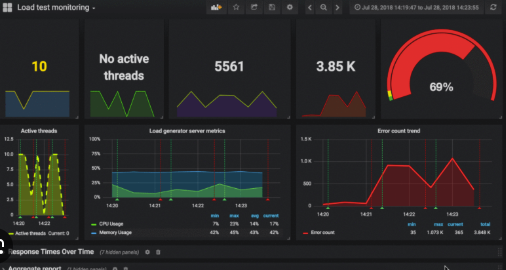
Instead of overwhelming users with raw data, these systems prioritize clarity. Key metrics are visible at all times. Supporting data is accessible without disrupting the main view.
This structure enables rapid decision-making.
A relevant comparison can be drawn from platforms such as Slot Desi, where user engagement depends on real-time updates and structured interfaces. These platforms combine live data, categorized options, and immediate feedback to guide user behavior. When examining how such systems operate, the experience of an online casino game website becomes particularly informative. You can explore this model online casino game website, where information is presented in clearly defined layers, allowing users to interpret changes quickly and act without delay. This approach demonstrates how structured, real-time data reduces uncertainty and supports faster decision-making.
Three principles from these systems are especially relevant:
- Continuous data flow — information updates instantly as conditions change
- Prioritized visibility — critical metrics remain accessible at all times
- Action-oriented design — interfaces are built to support immediate decisions
These principles address a key limitation in traditional business analytics.
Static reports require interpretation. Decision-makers must analyze data before acting. This process takes time and introduces variability.
Real-time systems remove this friction.
For example, a sales team can monitor performance metrics as they change. Conversion rates, pipeline activity, and revenue trends can be tracked continuously. This allows immediate adjustments.
Another example involves operational management.
Supply chain disruptions can be identified in real time. Businesses can respond quickly, reducing impact.
Consistency is also important.
Real-time platforms maintain standardized layouts. Users know where to find information. This reduces cognitive load and improves efficiency.
Business systems should adopt similar consistency. Predictable design speeds up interaction.
Designing Scalable Real-Time Decision Systems for Businesses
Building effective real-time systems requires aligning infrastructure, design, and organizational behavior. It is not just a technical upgrade. It is a structural transformation.
The first component is data infrastructure.
Organizations must collect and process data continuously. This requires integrating multiple sources, including customer interactions, financial metrics, and operational data.
Technologies such as event streaming platforms and cloud-based analytics enable this capability.
The second component is dashboard design.
Decision-makers need clear, actionable insights. Dashboards should highlight key metrics without unnecessary complexity. Visual hierarchy is essential.
For example, revenue performance, customer acquisition, and operational efficiency should be visible immediately. Supporting data should be accessible but not overwhelming.
This improves usability.
The third component is behavioral alignment.
Teams must adapt to real-time decision-making. This involves shifting from periodic reviews to continuous monitoring. Decisions become ongoing rather than scheduled.
A structured implementation approach can guide this transition:
- Identify critical decisions that require real-time support
- Define the data needed to inform those decisions
- Build systems to capture and process data continuously
- Design dashboards that prioritize clarity and action
This framework ensures alignment between data and outcomes.
Performance is critical.
Real-time systems must operate reliably. Delays reduce effectiveness. Inaccurate data undermines trust. Businesses must invest in scalable infrastructure and efficient processing.
Cloud-based systems support these requirements.
Segmentation enhances usability.
Different roles require different views of data. Executives need high-level summaries. Operational teams require detailed insights. Systems should provide layered access.
- High-level dashboards for strategic decisions
- Detailed views for operational analysis
This approach ensures relevance.
Consistency remains essential.
Users develop expectations about how systems work. Consistent design reduces learning time and improves efficiency.
Adaptability is also important.
Business environments evolve. New metrics become relevant. Systems must be flexible enough to incorporate changes without disruption.
Modular architecture supports this flexibility.
Measurement is necessary.
Organizations must track the effectiveness of their decision systems. Metrics such as response time, decision accuracy, and performance outcomes provide insight into system value.
Without measurement, improvement is limited.
Conclusion
Businesses must move beyond static analytics. Decision-making requires speed, accuracy, and continuous insight.
Real-time systems provide a clear solution. They transform data into actionable intelligence. They reduce friction and support faster decisions.
The strategic priorities are clear:
- Build systems that deliver data in real time
- Structure information for immediate understanding
- Align teams around continuous decision-making
For decision-makers, the implication is direct. Data must support action, not just reporting.
Organizations that adopt real-time decision systems will improve performance, reduce risk, and gain a competitive advantage in a rapidly changing environment.