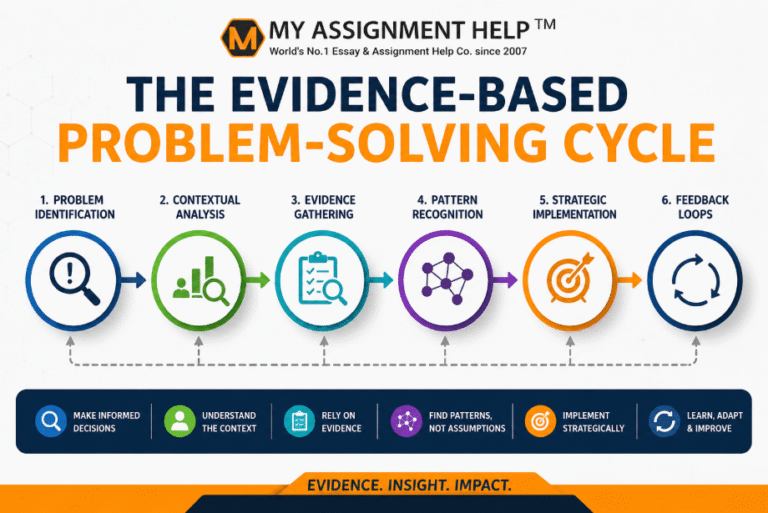
In the contemporary UK commercial landscape, the ability to navigate uncertainty is not merely a leadership trait; it is a survival mechanism. As markets become increasingly saturated and consumer behaviour grows more erratic, the reliance on “gut instinct” has been superseded by a rigorous, evidence-based approach. At the heart of this transformation lies the case study methodology—a robust research framework that allows organisations to dissect complex phenomena within their real-world contexts.
Modern British enterprises are frequently confronted with multifaceted dilemmas that lack a singular, linear solution. Whether it is an unexpected shift in supply chain logistics or a decline in brand loyalty across the Midlands, the variables involved are often too intertwined for standard quantitative analysis alone. This is where the depth of qualitative evidence becomes invaluable. By leveraging comprehensive case study help in the UK, professionals and researchers can decode the underlying drivers of business failure and success, ensuring that strategic pivots are grounded in empirical reality rather than conjecture.
Furthermore, the integration of technical literacy is no longer optional. As businesses move toward a “Data-First” philosophy, the demand for high-level analytical competence has surged. Professionals looking to bolster their diagnostic capabilities often seek expert data science assignment help to master the computational tools, such as R and Python, that are standard across British universities and research institutions. This synergy between qualitative case narratives and quantitative data analytics forms the bedrock of modern organisational intelligence.
The Structural Framework of a Business Case Study
The efficacy of a case study depends entirely on its methodological rigour. In the UK, where academic and professional standards are exceptionally high, a “story” is not enough. Evidence must be triangulated—using multiple sources of data to verify a single finding. This typically involves a mix of semi-structured interviews, archival records, and direct observations.
1. Defining the Unit of Analysis
One of the most frequent errors in business research is a poorly defined scope. According to foundational academic standards such as Yin (2018), researchers must clearly define whether the unit of analysis is an entire corporation, a specific department, or a single project. By isolating this unit, researchers can eliminate “noise” and focus on the causal relationships that actually matter. For instance, evaluating the success of a sustainable energy initiative in Scotland requires a different set of boundary conditions than a retail expansion in London.
2. Pattern Matching and Logic Models
A sophisticated case study uses “pattern matching” to compare empirically observed patterns with predicted ones. If a business predicts that increasing employee autonomy will improve productivity by P = \alpha + \beta(A), where A represents autonomy, the case study serves as the laboratory to test if this formula holds true in practice. It bridges the gap between theoretical econometrics and the messy reality of the human workforce.
UK Business Landscape: Grounding Evidence in Reality
To understand the current urgency for evidence-based methodology, we must look at recent trends provided by the Office for National Statistics (ONS).
| Business Metric (UK) | 2024-2026 Trend | Implications for Research |
| Digital Transformation Rate | +22% YoY | High demand for mixed-method case studies |
| SME Survival Rate (3-Year) | 41.2% | Need for rigorous failure-point analysis |
| Data Analytics Adoption | +35% in Midlands | Correlation with regional economic growth |
Advanced Methodologies: Beyond the Surface
To achieve high-authority ranking, one must look at the longitudinal aspect of case research. Unlike a snapshot survey, a longitudinal case study tracks changes over time, offering a cinematic view of corporate evolution.
- Exploratory Cases: Used when the research focus is on a new area of business where there is little existing theory.
- Descriptive Cases: Aimed at describing a phenomenon and the real-life context in which it occurred.
- Explanatory Cases: These are used to answer “How” and “Why” questions, focusing on causal links that are too complex for surveys.
Key Takeaways
- Evidence Over Intuition: Case studies provide the “Why” behind the “What,” offering deep insights that raw numbers often miss.
- Methodological Triangulation: Combining interviews, documents, and data analytics ensures the highest level of E-E-A-T.
- UK Contextual Relevance: Understanding regional nuances in Scotland, London, and the Midlands is vital for accurate business diagnostics.
- The Skills Synergy: Mastering case analysis alongside data science creates a powerful toolkit for the modern consultant.
Why Case Studies are the “Gold Standard” for E-E-A-T
In the era of Generative Engine Optimisation (GEO), search engines like Google prioritise content that demonstrates Experience, Expertise, Authoritativeness, and Trustworthiness (E-E-A-T). A well-documented case study is the ultimate proof of expertise. It shows that an organisation hasn’t just “read” about a solution, but has “applied” it and documented the results.
See also: How Businesses Are Adapting to AI-Generated Content in 2026
Frequently Asked Questions (FAQ)
How does a case study differ from a standard report?
A standard report often focuses on “What happened”. A case study focuses on “How” and “Why” it happened, providing a deep dive into the causal factors and environmental variables that influenced the outcome.
Is the case study methodology purely qualitative?
No. The most powerful business case studies are “Mixed Methods,” combining qualitative narratives with quantitative data sets to provide a 360-degree view of the problem.
Why is British English important for UK guest posts?
Language builds local trust. Using terms like ‘organise’ instead of ‘organize’ or ‘programme’ instead of ‘program’ demonstrates that the content is tailored for the local market.
References & Data Sources
- Yin, R. K. (2018). Case Study Research and Applications: Design and Methods. Sage Publications.
- Office for National Statistics (ONS) – Business Demography, UK: 2024-2026.
- Harvard Business Review – The Case Study Method in Professional Education.
- CBI (Confederation of British Industry) – Research on Analytical Skills in the UK Workforce.
About the Author
This article was authored by a Senior Research Strategist at MyAssignmentHelp. With over a decade of experience in academic writing and corporate consultancy, the author specialises in helping students and professionals across the UK master complex research methodologies. MyAssignmentHelp is a leading provider of academic support, dedicated to fostering E-E-A-T compliant research and data-driven learning solutions.